
The Price of Power: Estimating the Cost of a New Excavator in 2025
The acquisition of a new hydraulic excavator—the quintessential piece of heavy construction equipment—represents a major capital expenditure for any contracting, mining, or infrastructure firm. In 2025, determining the cost is more complex than ever, influenced not only by the machine's inherent size and brand but also by global supply chain volatility, regulatory compliance costs, and the rapid integration of advanced technology.
The cost of a new excavator in 2025 spans a massive range, from as little as $30,000 for an entry-level mini-excavator to over $2,000,000 for a specialized mining-class machine. The true cost is not a single price point but a calculation derived from a blend of technical specifications, market dynamics, and total ownership lifecycle projections.
I. 2025 Cost Breakdown by Excavator Size Class
The most significant factor determining the purchase price is the machine's operating weight, which dictates its power, reach, and digging capacity. The 2025 market segments show distinct pricing clusters:
|
Excavator Class (Metric Tons) |
Operating Weight (Approx. lbs) |
New Base Price Range (USD - 2025 Est.) |
Typical Applications |
|
Mini/Compact (1-6 Tons) |
2,200 – 13,000 lbs |
$30,000 – $110,000 |
Landscaping, utility work, residential foundation repair, indoor demolition. |
|
Mid-Size (10-25 Tons) |
22,000 – 55,000 lbs |
$180,000 – $400,000 |
General contracting, road building, site prep, commercial construction. |
|
Large/Heavy (25-45 Tons) |
55,000 – 99,000 lbs |
$350,000 – $750,000 |
Large-scale infrastructure, deep trenching, rock breaking, major commercial projects. |
|
Ultra/Mining (45+ Tons) |
99,000 lbs+ |
$800,000 – $2,000,000+ |
Quarries, large mines, massive earthmoving, large-scale industrial demolition. |
II. The Premium for Brand and Value Retention
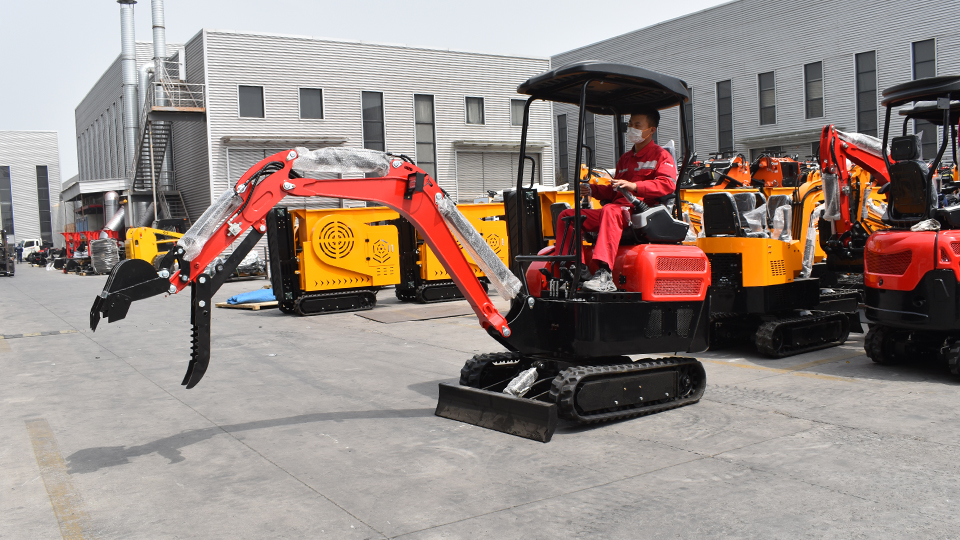
Brand selection in 2025 is not just about initial quality; it is a calculation of total cost of ownership (TCO) and resale value.
|
Premium Brand |
Typical Price Position |
Key Value Proposition |
|
Caterpillar (CAT) |
High-End Premium |
Superior durability, extensive dealer network, highest residual (resale) value. |
|
Komatsu |
High-End Premium |
Advanced fuel efficiency, integrated technology (e.g., KOMTRAX), strong reliability. |
|
Volvo |
Premium/Mid-Range |
Advanced operator comfort, industry-leading fuel efficiency, high safety standards. |
|
John Deere |
Mid-Range |
Strong parts and service support, excellent hydraulic performance, competitive financing. |
|
Kubota/Bobcat |
Mini/Compact Specialist |
Excellent maneuverability, strong brand loyalty in the compact sector, often lower TCO for small machines. |
While a premium brand machine (e.g., Cat 320 or Komatsu PC210LC) may command an initial price of $230,000 – $270,000, competitors from Hyundai or Doosan in the same size class might be priced 10% to 15% lower. The financial trade-off is often justified by the premium brands' ability to retain 60-75% of their original value after 4,000 operating hours.
III. Technology Integration: The 2025 Cost Multiplier
In 2025, technology is a significant cost driver, yet it also represents the most potent source of operational efficiency and cost reduction over the equipment’s lifecycle.
|
Technology Feature |
Estimated Additional Cost (2025) |
Impact on TCO & Productivity |
|
GPS Grade Control (2D/3D Systems) |
$15,000 – $50,000 |
Productivity: Reduces staking/rework, achieving target grade up to 50% faster. |
|
Advanced Telematics (Integrated) |
$2,000 – $8,000 |
Maintenance: Predictive maintenance scheduling; Security: Geo-fencing/theft prevention. |
|
Hydraulic/Auxiliary Circuits (High Flow) |
$10,000 – $25,000 |
Versatility: Essential for powering high-demand attachments (breakers, mulchers, shears). |
|
Safety Systems (360° Vision, Proximity Sensors) |
$5,000 – $15,000 |
Safety: Drastically reduces risk of job site accidents and insurance claims. |
The decision to invest $30,000 in a 3D machine control system on a $300,000 mid-size excavator must be viewed through a TCO lens. If the technology saves 100 labor hours per month on a project, the system pays for itself rapidly.
IV. The Electrification Premium: Zero-Emission Excavators
The shift toward zero-emission equipment is a defining trend of 2025, driven by environmental regulations and urban site requirements. Electric excavators, particularly in the mini/compact classes, are available from manufacturers like Volvo, Bobcat, and Kubota.
Cost Premium: Electric models typically carry a 40% to 60% price premium over their diesel equivalents due to the high cost of lithium-ion battery packs and specialized charging infrastructure.
Example: A new 5-ton electric compact excavator may start at $95,000 – $110,000, compared to $60,000 – $75,000 for the diesel version.
TCO Offset: The higher initial cost is offset by significantly lower fuel (electricity is cheaper than diesel) and maintenance costs (fewer moving parts, no diesel filters, no engine oil changes).
V. Macroeconomic and Supply Chain Factors in 2025
The final sticker price in 2025 is not solely determined by the manufacturer's suggested retail price (MSRP); it is heavily influenced by global economics:
Inflation and Material Costs: Persistent global inflation, specifically in steel, aluminum, and fabricated metal products (which are critical components in the boom, stick, and undercarriage), continues to push manufacturing input costs up by 5% to 8% year-over-year.
Tariffs and Trade Policy: Ongoing trade policy, including Section 232 tariffs on raw materials, has increased the cost for manufacturers, who are increasingly passing these costs onto the consumer.
Supply Chain Constraints: While lead times have generally improved since peak disruption, delays persist for highly specialized, high-tech components (such as computer chips for telematics and advanced hydraulic valves). Extended lead times keep new inventory low, sustaining high price levels.
VI. The Total Cost of Ownership (TCO) Perspective
A technically sound purchasing decision must look beyond the initial cost (CapEx) to the total operating expenditure (OpEx). For a mid-size excavator operating 1,000 hours annually, the TCO in 2025 includes:
|
Operating Cost Category |
Annual Estimated Cost (2025) |
TCO Factor |
|
Fuel (Diesel/Electric) |
$12,000 – $35,000 |
The largest variable cost; depends heavily on fuel efficiency (gal/hr) and diesel price. |
|
Scheduled Maintenance |
$6,000 – $18,000 |
Oil, filters, fluids, and general preventative care. |
|
Repairs/Component Wear |
$8,000 – $15,000 |
Undercarriage wear, hydraulic component replacement, bucket teeth. |
|
Insurance/Compliance |
$1,000 – $5,000 |
Liability, theft insurance, and environmental compliance fees. |
|
Depreciation (Annualized) |
$22,000 – $35,000 |
The loss of value, heavily influenced by brand and maintenance history. |
Conclusion: A Strategic Investment
Buying a new excavator in 2025 requires a highly strategic approach. The initial purchase price is a necessary starting point, ranging from $30,000 to over $2,000,000 based on size. However, the true long-term financial health of the investment is determined by a careful evaluation of:
The Technology Premium: Is the $30,000 spent on 3D grade control justified by the expected productivity gains and reduced labor costs?
The TCO Calculation: Does the fuel efficiency of a premium model or the maintenance savings of an electric model offset a higher initial price tag over a projected 8-12 year service life?
The optimal purchasing strategy in 2025 is to align the machine's technical specifications and integrated technology precisely with the project type to achieve the lowest cost-per-hour operation.
Post time:Sep-25-2020
